A son born into a famous household
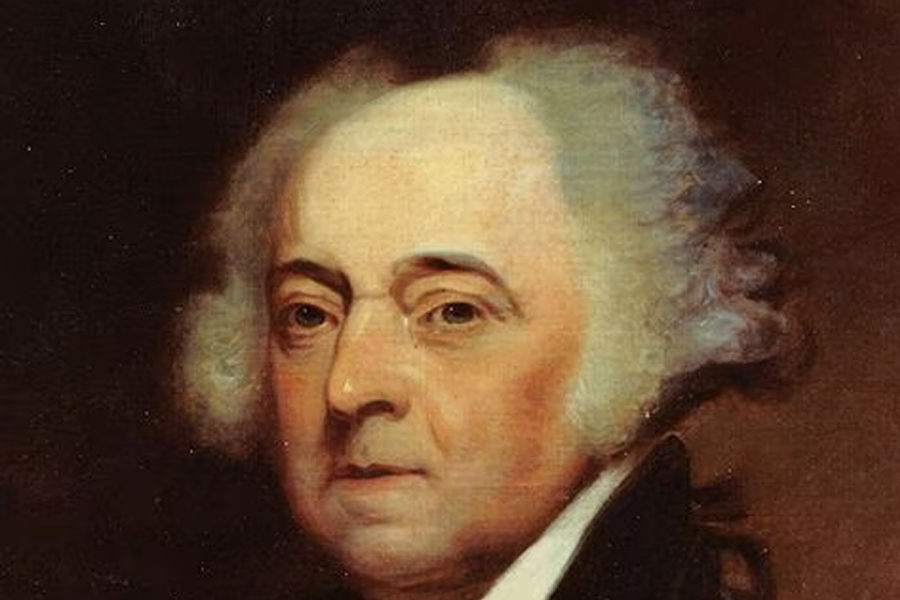
Joseph Harrod Adams is small in a large doorway. He was born in Quincy, Massachusetts, on December 16, 1817, the youngest child of Thomas Boylston and Ann Harrod Adams. That alone positions him in one of the most famous American families, where history flows like weather through the walls. His grandpa was second US President John Adams. Abigail Adams, his grandmother, was smart, disciplined, and important to the family. Joseph was not the loudest or most famous Adams, but his family was devoted to public service.
He had siblings who experienced service, loss, and expectation. The oldest was Abigail Smith Adams Angier. Elizabeth Coombs Adams was single. Thomas Boylston Adams Jr. died young in the Army. Also, Frances Foster Adams died young. Adult Isaac Hull Adams resided in Quincy. Naval officer John Quincy Adams. The youngest, Joseph Harrod Adams, preferred the sea. He was part of a political powerhouse family that turned legacy into service.
The Adams family web around him
The Adams family around Joseph was dense, layered, and almost tree like in its branching. I think of it as a network of roots and beams, each name supporting another. The following family map gives the essential structure.
| Family member | Relationship to Joseph Harrod Adams | Brief role or note |
|---|---|---|
| Thomas Boylston Adams | Father | Son of John Adams and Abigail Adams |
| Ann Harrod Adams | Mother | Daughter of Joseph and Anna Harrod |
| John Adams | Grandfather | Statesman and President |
| Abigail Adams | Grandmother | Family matriarch and writer |
| Abigail Adams Smith | Aunt | Married William Stephens Smith |
| Susanna Adams | Aunt | Died in childhood |
| Elizabeth Adams | Aunt | Died in childhood |
| John Adams Sr. | Great grandfather | Father of John Adams |
| Susanna Boylston | Great grandmother | Mother of John Adams |
| William Smith | Great grandfather | Father of Abigail Adams |
| Elizabeth Quincy Smith | Great grandmother | Mother of Abigail Adams |
| Charles Francis Adams Sr. | Cousin | Child of John Quincy Adams |
| George Washington Adams | Cousin | Child of John Quincy Adams |
Thomas Boylston Adams was the bridge between the Revolutionary generation and Joseph’s own age. Ann Harrod Adams came from a more local New England background, rooted in Haverhill. That contrast matters. Joseph was not only born from public history. He was also born from ordinary family life, from homes and estates and legal papers, from money held in trust and property passed through hands. His life shows how national fame and private inheritance can sit in the same chair.
Naval service and a life at sea
Joseph entered the U.S. Navy as a midshipman in 1833. Later he became a passed midshipman in 1838. That career path may sound modest today, but in the early 19th century it meant discipline, travel, hierarchy, and exposure to the hard geometry of naval life. The sea was not romantic for the people who worked it. It was a stern teacher. It measured men in storms, distance, and obedience.
I think Joseph’s naval story matters because it shows a kind of Adams family continuity. His grandfather had shaped the republic in political struggle. Joseph shaped his own life in military service. He did not stand on a platform. He stood on a deck. He did not draft laws. He did the daily work of command structure, seamanship, and navigation. He was attached to the U.S. Frigate United States during one stage of his early service and later served on the U.S. Steam Frigate Powhatan, which linked him to the naval expedition that carried Commodore Matthew C. Perry into Asian waters.
A surviving financial note records Joseph drawing a third bill of exchange for $100 while at Port Mahon in 1834. That small sum is easy to overlook, yet it feels vivid to me. It is one of those tiny anchors that keep a historical life from drifting away. It tells me where he was, what he needed, and how naval officers lived inside a world of accounts and supply.
Money, property, and the quieter side of his life
Joseph’s story also includes property and inheritance. In 1842, he signed documents tied to the Quincy wood lot and to his share of John Adams’s estate. These details reveal the less dramatic but deeply human side of the Adams family. Behind speeches, commissions, and public memory, there were deeds, signatures, receipts, and trusts. There were children waiting to come of age before inheriting. There were parcels of land and legal responsibilities.
I find this part of his life revealing. It shows that Joseph was not floating free of his family name. He was tied to it by law, money, and duty. He had an inherited place in a family system that was both prestigious and administrative. The family did not simply remember history. It managed it.
Final voyage and death in China
Joseph’s life ended far from Quincy. He died on 4 October 1853 in China while serving aboard the Powhatan with the East India and Japan Squadron. He was buried in Macao’s Old Protestant Cemetery. His memorial was erected by his brother officers. That phrase is powerful. It tells me that his comrades regarded him with enough respect to keep his memory alive in stone.
His death belongs to the broader story of the age of naval expansion and diplomacy, when American ships carried not only trade and power but also men into distant waters. Joseph was one of those men. His final resting place sits across the world from his birthplace, like the closing line of a letter sent across an ocean.
Family members in focus
Because his family is part of his life, Joseph Harrod Adams cannot be understood without them.
His father, Thomas Boylston Adams, continued the Adams name. The youngest son of John and Abigail Adams married Ann Harrod in 1805. He left Joseph a distinguished heritage and a desire for public service.
The Haverhill Harrod family was tied to Joseph by his mother, Ann Harrod Adams. Although Adams was a national surname, she kept the home local. Her presence reminds me that every great family has a quieter branch upholding the home.
His sister, Abigail Smith Adams Angier, represents the household through marriage and adulthood. Another sister, Elizabeth Coombs Adams, stayed single and preserved the family story.
His brother Thomas Boylston Adams Jr. died young in the service. He served like Joseph, except he died earlier and on land.
Frances Foster Adams, another sibling, died young, showing that not all family branches thrive.
Isaac Hull Adams, another brother, lived in Quincy and maintained the family presence. The youngest brother after Joseph, John Quincy Adams, died unmarried in 1854 after serving in the Navy. His life resembles Joseph’s like a mirror.
As grandparents, John and Abigail Adams impact future generations. Their offspring, Thomas Boylston Adams and his siblings, link Joseph to a building, arguing, and remembering America.
FAQ
Who was Joseph Harrod Adams?
Joseph Harrod Adams was a U.S. Navy officer born in Quincy, Massachusetts, in 1817. He was the youngest child of Thomas Boylston Adams and Ann Harrod Adams and belonged to the extended family of President John Adams.
What was Joseph Harrod Adams known for?
He is best known for his naval service. He became a midshipman in 1833, later a passed midshipman, and served on ships including the United States and the Powhatan. He died in China in 1853.
Did Joseph Harrod Adams marry or have children?
I do not find reliable evidence of a spouse or children in the material available here. His documented family connections center on his parents, siblings, grandparents, and broader Adams relatives.
Where did Joseph Harrod Adams die?
He died in China on 4 October 1853 while serving aboard the Powhatan. He was buried in Macao, in the Old Protestant Cemetery.
Why does Joseph Harrod Adams matter in the Adams family history?
He matters because he shows how the Adams family legacy continued beyond politics. His life reflects service, inheritance, duty, and distance. He is a quieter figure, but not a lesser one.