An Irish Childhood Shaped by Medicine Literature and History
When I look at the life of Garrett O Connor, I see a story that sits at the intersection of medicine, addiction, Irish history, family, and the complicated psychology of shame. Born in Dublin sometime in the 1930s, O Connor came from a distinguished Irish family whose story reached across several generations of public life. His family connections included medicine, literature, politics, and the cultural life of Ireland.
His great grandfather, Matt Harris, was associated with the Irish Land League and the Irish Republican Brotherhood and served as a Member of Parliament for East Galway. O Connor was also part of a family that included his older brother Ulick O Connor, the noted writer, poet, historian, and barrister who was born in 1928. His siblings included Michael, Donough, and his sister Nóirín Buckley.
O Connor attended St Mary’s Holy Ghost College in Rathmines before continuing his education at Clongowes Wood College. In 1960, he graduated as a physician from the Royal College of Surgeons in Ireland. He subsequently traveled to the United States for psychiatric training at Johns Hopkins University School of Medicine.
That move changed the direction of his professional life. Ireland remained central to his identity, but American psychiatry gave him an enormous laboratory in which to explore community treatment, addiction, family relationships, trauma, and human behavior.
From Johns Hopkins to Addiction Medicine
O Connor’s psychiatric career was extremely extensive. He was an Associate and then tenured Psychiatry Professor at Johns Hopkins. He led an innovative community psychiatry training program and founded one of the first US psychiatric emergency services.
His work was not limited to hospitals. He ran a heroin addiction multidisciplinary community treatment program and an intensive treatment center for distressed families. He believed psychiatry should reach individuals in their homes, not in institutions.
He came to Los Angeles to become a UCLA Associate Professor of Psychiatry in Residence in 1972. There, he managed the West Los Angeles Veterans Administration Comprehensive Alcohol and Drug Treatment Program and established practical teaching methods for medical students. He tested outpatient and community-based addiction treatments at REPAIR, his private practice.
This work was shaped by his alcoholism. O Connor recovered on March 6, 1977. He shared his past in his teaching and clinical philosophy. For him, recovery was more than just medicine. He understood it internally.
Garrett O Connor and the Betty Ford Years
By the early 2000s, O Connor had become closely associated with the Betty Ford Center. Around 2003, he was appointed Chief Psychiatrist and became Medical Director of the Licensed Professionals Treatment Program. He founded and guided the Clinical Diagnostic Evaluation Program, working with professionals whose substance use or behavioral problems could affect their careers and responsibilities.
Around 2007, he became President and the first Chief Executive Officer of the Betty Ford Institute for Prevention, Research and Education in Addictive Disease. He also served on the Board of Directors of the Betty Ford Clinic.
His approach emphasized the family rather than viewing addiction as an isolated problem belonging to one individual. He supported programs for children between the ages of 7 and 12 who came from families affected by addiction. The idea was straightforward but powerful: addiction leaves footprints on everyone in a household, including children who may not understand why their family feels unstable.
O Connor also worked extensively with safety sensitive professionals and developed expertise in fitness for duty assessments, workplace addiction, and liability. For more than four decades, he lectured and conducted workshops in the United States and internationally.
The Theory of Malignant Shame
The idea most strongly associated with Garrett O Connor is malignant shame.
I find the distinction he made between ordinary shame and malignant shame especially important. Healthy shame can function like an internal warning light. A person recognizes that something they did was harmful or inappropriate and can change their behavior. Malignant shame is different. It moves from behavior into identity.
Instead of thinking, “I did something wrong,” the person begins to feel, “There is something fundamentally wrong with me.”
O Connor described malignant shame as a deep conviction of personal inferiority accompanied by suppressed feelings and an inability to trust others. In his view, shame could become almost like the conductor of an emotional orchestra, organizing anger, envy, fear, guilt, and self hatred while simultaneously forcing those emotions underground.
The result can be a psychological trap. A person feels inferior, hides the feeling, becomes angry about being diminished, feels ashamed of the anger, suppresses it again, and eventually loses touch with authentic emotion.
O Connor originally examined these patterns in individuals who experienced prolonged abuse or humiliation. He then expanded the concept beyond individual psychology.
Ireland and the Burden of Historical Shame
The most notable contribution of O’Connor was bringing malignant shame to Irish history and Irish Americans.
He linked the idea to centuries of colonial rule, land confiscation, the Penal Laws, the Great Famine, and religious and societal institutions. According to him, historical trauma can become embedded in families and institutions and passed down.
He was particularly interested in how cultural traditions may remain after historical circumstances altered. A population may adapt to self-suppression. Ambition may be suspicious. Anger may be hazardous. Success may bring remorse or self-criticism.
The approach was also used to Irish alcoholism. In this context, alcohol may momentarily reduce anxiety, emotional repression, loneliness, and self-criticism. However, drinking could cause further embarrassment, reinforcing the problem.
O Connor even despised the Celtic Tiger’s ascent and fall. He believed that Ireland’s extraordinary economic turnaround could coexist with psychological and cultural wounds. Therefore, the financial collapse may feel psychologically familiar, like punishment for exceeding genetic limits.
A Marriage to Fionnula Flanagan
Garrett O Connor’s personal life was closely intertwined with another prominent Irish figure, actress Fionnula Flanagan.
Fionnula Flanagan, born in Dublin on December 10, 1941, was already developing her theatrical career when the two met in Baltimore in 1969. She was touring in Brian Friel’s play Lovers, while O Connor was working at Johns Hopkins.
Their meeting became one of the defining relationships of both their lives. O Connor described it as love at first sight. Flanagan later recalled that it took her approximately two days.
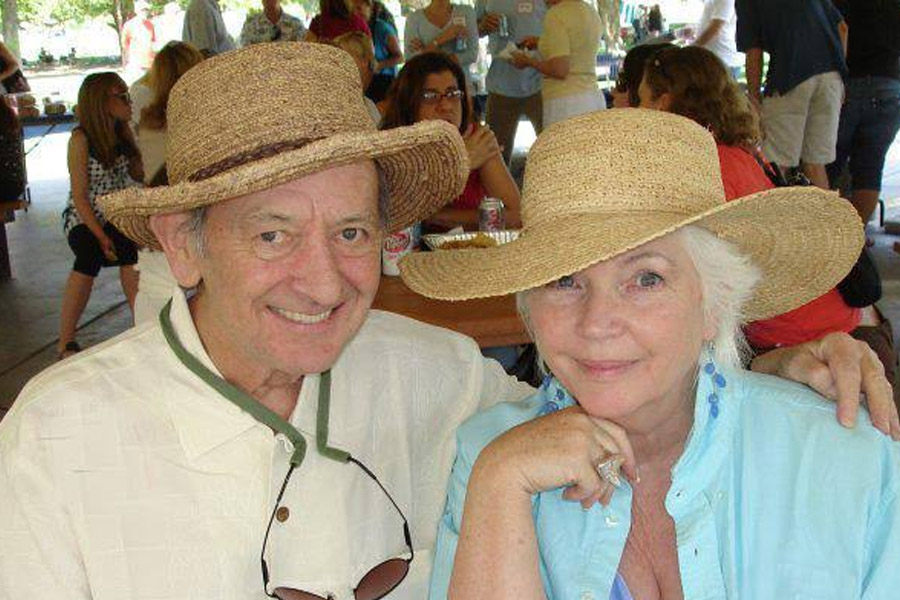
They married in 1972 and remained together for more than 42 years, until O Connor’s death in 2015. After their marriage, they established their life in Los Angeles and spent decades living in Beverly Hills and the Hollywood Hills.
Their home became part residence and part Irish gathering place. They maintained strong connections with Irish artists, writers, performers, and members of the Irish American community. Their marriage also offered Flanagan an unusually intimate perspective on psychiatry. Being married to a psychiatrist meant that ordinary arguments could sometimes feel like psychological examinations, something she discussed with characteristic humor and honesty.
Flanagan later described O Connor as the most fascinating man she had ever met. His death profoundly altered her relationship with America. She eventually returned to Ireland, spending time in the Wicklow area where their life had also become rooted.
Children Grandchildren and the O Connor Family
O Connor was remembered not only as a psychiatrist but as a loving father and grandfather.
His family included Matthew O Connor, who was described in some references as Flanagan’s stepson, and Turlough O Connor, also known as Turk. Turlough was married to Mary Cleary. Another family member was Mary Lee Woolf, also referred to as Mary or Mary Lee.
Matthew O Connor was married to Julie O Connor. The extended family included grandchildren Kalina, Tom, Finnian, Serena, Clayton, Aidan, and Olivia. Kalina’s partner was Ryan. O Connor also had great grandchildren named Mason and Cove.
The family connections extended through the Buckley, O Connor, Flanagan, Kavanagh, and Corcoran families. The household also included a dog named Betty, a small personal detail that adds warmth to an otherwise remarkably public professional story.
Much of the family’s private life remained private. That restraint is significant because O Connor’s public identity was enormous in professional circles, while his children and grandchildren largely remained outside the spotlight.
Later Years and Recognition
O Connor continued working well into his later years. In 2010, he received an honorary Doctorate in Medicine from the National University of Ireland. He had already received the Conway Hunter MD Society Distinguished Service Award in 2004 and the Vernelle Fox Award from the California Society of Addiction Medicine in 2006.
In 2013, Cirque Lodge honored him with its Pioneer in Recovery Award. He also became Director of the Elaine Breslow Institute for Research, Prevention and Education in Addiction at Beit T’Shuvah in Los Angeles in March 2013.
His work remained connected to Ireland as well. He collaborated with psychiatrist Ivor Browne on questions of community development and human potential, including work associated with the aftermath of Bloody Sunday in Derry.
During the final period of his life, O Connor was involved in a film project based partly on his experiences with Irish writer and director Terry McMahon. He also had occasional connections to television and entertainment, including work as a medical adviser and a small acting appearance associated with Archie Bunker’s Place.
The Final Chapter in Wicklow
Garrett O’Connor died quietly in his Annacurragh home near Aughrim, County Wicklow, on September 1, 2015.
Professional tributes, Irish cultural circles, recovery communities, and addiction treatment colleagues recognised him. Mount Jerome in Dublin conducted his funeral, followed by a California commemoration.
Personal wealth was never a public highlight. He held key positions at prominent addiction treatment centers, had a private practice, and had a long and successful career, yet his assets and net worth were not publicly disclosed.
His addiction and shame-based conceptual architecture continued. Beginning with medicine and psychiatry, his career progressed thru community treatment and addiction rehabilitation to studying how families and cultures retain emotional wounds.
FAQ
Who was Garrett O Connor?
Garrett O Connor was an Irish born psychiatrist and addiction treatment specialist who became a prominent figure in American psychiatry. He worked at Johns Hopkins and UCLA, directed addiction treatment programs, served as Chief Psychiatrist at the Betty Ford Center, and became the first President and CEO of the Betty Ford Institute.
What was Garrett O Connor best known for?
He was particularly known for developing and promoting the concept of malignant shame. He used the idea to explain how prolonged personal, familial, institutional, and cultural trauma can become internalized as a deep sense of unworthiness.
What is malignant shame?
Malignant shame is a destructive form of shame that becomes part of a person’s identity rather than remaining a temporary response to a particular action. It can involve low self worth, emotional suppression, distrust, self hatred, and difficulty experiencing genuine achievement or happiness.
How did O Connor connect malignant shame with Ireland?
O Connor argued that centuries of colonial domination, dispossession, famine, religious control, social repression, and institutional trauma could contribute to patterns of internalized shame. He believed these patterns could be transmitted through families and institutions across generations.
Was Garrett O Connor married?
Yes. He married Irish actress Fionnula Flanagan in 1972 after meeting her in Baltimore in 1969. They remained married until his death in 2015.
When did Garrett O Connor enter recovery?
O Connor began sustained recovery from alcoholism on March 6, 1977. His personal experience became an important part of how he understood and taught addiction recovery.
Did Garrett O Connor have children?
Yes. Family accounts describe him as a loving father and grandfather. His family included Matthew O Connor, Turlough O Connor, and Mary Lee Woolf, along with grandchildren and great grandchildren.
When did Garrett O Connor die?
Garrett O Connor died on September 1, 2015, at his home in Annacurragh, near Aughrim in County Wicklow, Ireland.